
Spotting Impersonators: Building Verifiable Enterprise Cyber Defense
- 2026/09/30
-
分類
Event Community
-
瀏覽次數
25

Recently, social media platform account hijacking incidents have been frequently reported. Many people have received links sent from relatives and friends asking them to "vote for my child." Upon clicking open the familiar login screen and entering their account credentials, they immediately lose control of their messaging software accounts. According to data released by messaging app LINE in September 2026, customer service reports of hijacked accounts spiked by nearly 100% in August compared to July, highlighting that impersonation scams have become one of the most severe cybersecurity challenges today. In response, Jo-Fan Yu, Director and CEO of the Taiwan Network Information Center (TWNIC), appealed that when familiar names and interfaces can be easily forged, enterprises must prioritize "verifiable" defense mechanisms as a fundamental requirement when providing digital services, offering consumers clear bases to verify who they are dealing with.
Yu observed that a single compromised account often becomes a scamming breach point to reach even more relatives and friends. Similarly, if an enterprise brand is impersonated online, it severely erodes consumer trust in its genuine services. The core philosophy of "verifiability" lies in making service origins verifiable and traceable. From the user's perspective, the true identity behind the registered domain must be verifiable; from a system perspective, connection data and email sources must be precisely cross-checked.

▲Jo-Fan Yu, Director and CEO of the Taiwan Network Information Center (TWNIC)
Local Identification with Dedicated Domains Strengthens Brand Connection
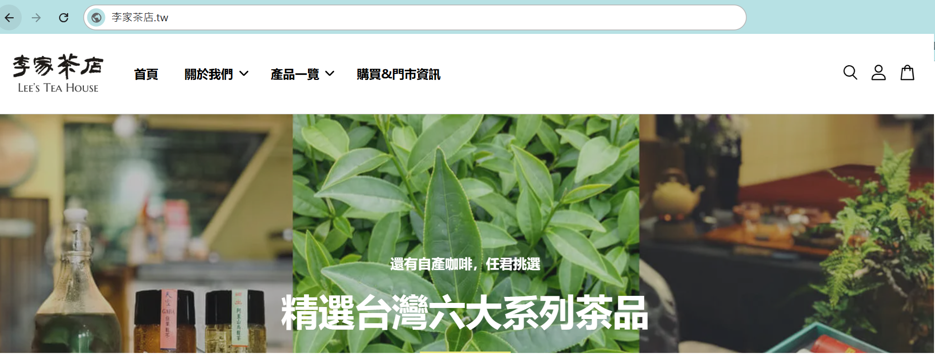
In practice, the first step for enterprises should be establishing a clear connection between their official domains and their brands. Yu recommended that enterprises utilize dedicated domains with high local recognition, such as .台灣 or .tw. She particularly emphasized the advantages of Chinese domain names: "Pairing a Chinese brand with a Chinese domain name not only drastically lowers the reading and memory thresholds for local citizens, but also visually and intuitively reinforces local trust. For example, 全國廣播.tw uses its brand name directly as the website address, allowing consumers to connect the URL with the brand intuitively without needing to memorize English names, pinyin, or acronyms. Similar Chinese domains like 李家茶店.tw or 飛鼠部落.台灣—compared to their original English domains leestea.tw and yabit.org.tw—convey the brand, products, and Taiwan's local characteristics right from the URL itself. Pairing a Chinese brand with a Chinese domain name significantly lowers reading and memory barriers for local audiences, while visually enhancing local identification and trust. Compared to fake URLs made of unfamiliar English letters, numbers, or close misspellings, users can more easily spot discrepancies, reducing the chances of fake websites passing off as legitimate ones."
▲
Domain Identity Verification Blocks Impersonation
To further verify domain identity, TWNIC has promoted the ".tw Green Domain Name Verified Service" mechanism. Once the registration details and identity documents submitted for a domain application pass rigorous review, users only need to click the certification seal on the website to enter TWNIC's official authentication page, where they can accurately verify the domain name, registrant name, and unified business number. When a domain corresponds to a verified organizational identity, consumers gain an added line of defense to identify official services.
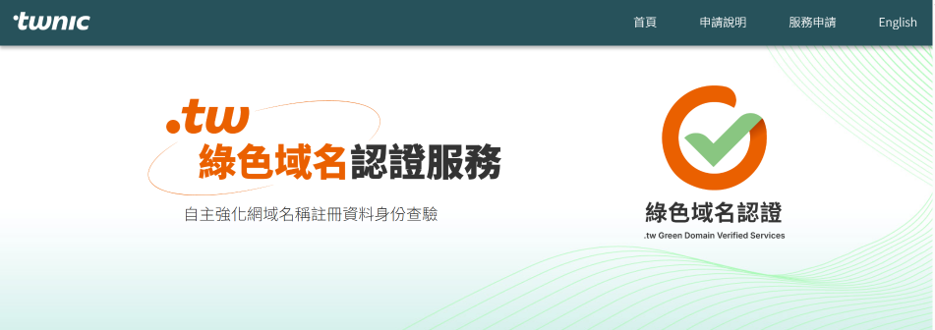
▲.tw Green Domain Name Verified Service https://greendn.tw
Beyond certifying the website itself, the process through which computers locate website addresses is equally indispensable. Yu used an address book as a metaphor: the Domain Name System (DNS) is responsible for helping computers find a website's network address, while the Domain Name System Security Extensions (DNSSEC) attach a verifiable digital signature to this information. As long as the domain side completes the signature and the query service executes validation, forged or tampered data can be effectively identified. This verification mechanism even extends to routing information that guides network transmission directions. Through Resource Public Key Infrastructure (RPKI)-supported Route Origin Validation (ROV), service providers can confirm whether the source network indicated in routing information is authorized by the address holder, much like verifying a letter of authorization.
The same verification principles must be applied to outgoing enterprise emails. Yu reminded that enterprises need to protect not only their websites, but also every notification sent under their name. Companies should actively enable Sender Policy Framework (SPF) to specify which servers are authorized to send mail, add DomainKeys Identified Mail (DKIM) as a digital seal, and finally implement DMARC to cross-check verification results against the sender domain, instructing receiving systems on rejection policies when encountering spoofed emails. Taking global tech giants' cybersecurity policies as an example, Google and Yahoo officially implemented new sender requirements in the first quarter of 2024, mandating that enterprises sending bulk emails must set up SPF, DKIM, and DMARC authentication. If these mechanisms are not implemented, legitimate marketing or notification emails sent by enterprises will be directly rejected or flagged as spam. This globally impactful policy proves that blocking impersonation is no longer optional; "verifiable source" is an uncompromisable standard for enterprise digital operations.
Before users hand over personal data or payments, enterprises should provide verifiable proof. Making current trust verifiable is a fundamental corporate responsibility; when facts need to be reconstructed and clarified later, enterprises must rely on "traceable" management mechanisms, which will serve as the next crucial line of defense in safeguarding digital assets.