
Internet Week 2026: Registration is ongoing
- 2026/04/24
-
分類
Event
-
瀏覽次數
2,022
- #internetweek.tw
- #網路週
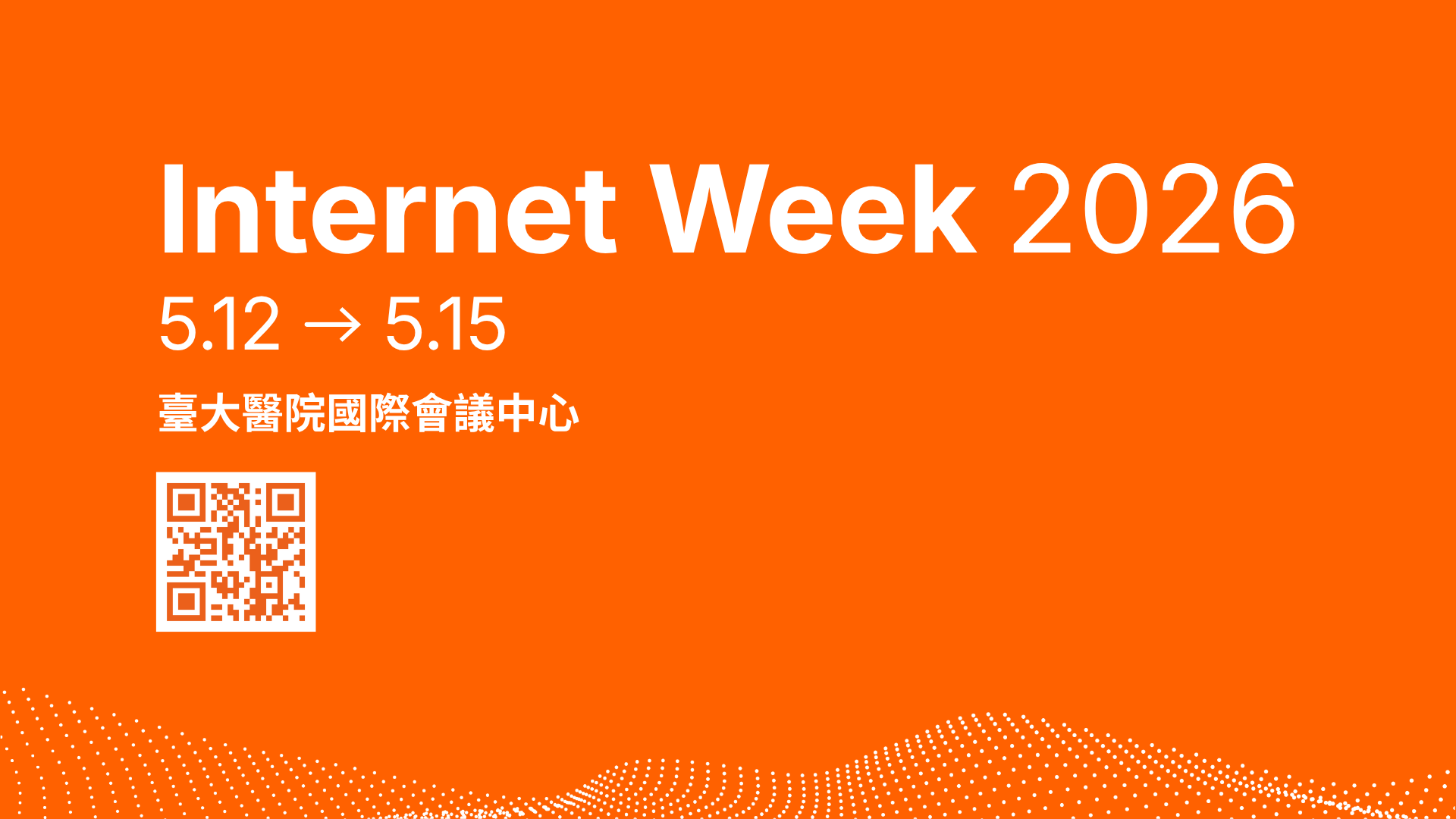
With the widespread application of AI and the continuous evolution of digital infrastructure, the development of the Internet faces new governance and technical challenges. Exploring digital sovereignty, information security, AI regulations, and social trust has become a critical focus in the current Internet environment.
To facilitate professional exchange among industry, government, academia, and research institutions, Internet Week 2026 will be held in mid-May this year. The four-day event will feature over 20 thematic sessions, aiming to establish an Internet governance dialogue platform with international perspectives and substantial impact.
Integrating Six Major Internet Forums: Implementing the Multi-stakeholder Model
This conference concretely demonstrates the "multi-stakeholder" governance model by integrating several significant domestic and international Internet forums and technical communities, including:
- ICANN APAC-TWNIC Engagement Forum
- 2026 Internet Communication Governance Forum
- APNIC-TWNIC IP Policy and Resource Management Meeting
- TWNIC Community Forum
- TWIGF (Taiwan Internet Governance Forum)
- TWNOG (Taiwan Network Operators Group)
Through the joint participation of the public sector, international organizations, and technical communities, the event provides an objective, neutral, and diverse space for professional exchange.
Key Themes and Challenges
Featuring forward-looking perspectives from leading domestic and international experts, Internet Week will offer in-depth discussions on infrastructure topics such as Registration Data Access, DNS security and resilience, and IP resource governance. Furthermore, the event will address four major challenges facing the current digital society:
- Digital Trust and Risk Governance in the AI Era: Exploring trust risks when introducing AI into finance, e-commerce, and public services, as well as how to establish content governance mechanisms with transparency and accountability.
- Digital Resilience and International Regulatory Trends: Focusing on the NIS2 Directive and its subsequent developments, exploring digital environment resilience and corporate responses.
- Network Resilience and Modern Protocol Trends: Focusing on ISP deployment, IP resource governance, and the impact of protocol upgrades on performance, security, and network resilience.
- Diversity and Inclusion in Digital Governance: Featuring a dedicated "Tech Women" session to explore how to substantively incorporate female perspectives and diverse experiences into digital decision-making.
TWNIC stated that the Internet has long ceased to be merely a technical infrastructure; it is now closely tied to democratic governance, industrial innovation, and social trust.
Event Information and Registration
- Date: Tuesday, May 12 – Friday, May 15, 2026
- Venue: NTUH International Convention Center
- Format: Hybrid (In-person and Online)
- Official Website: internetweek.tw